
Have questions? Reach out to our team to discuss specifics to your project.
Design Trends and Tips for Hospitality Seating in 2026
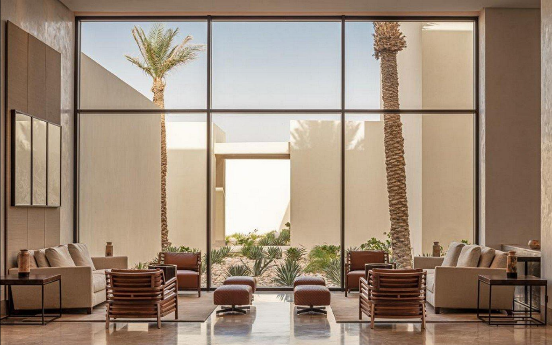
Seating has become an influential tool in shaping the hotel guest experience. It has come a long way from being purely functional to now defining how guests interact with a space and where they gather, work, and relax. Seating plays the role of anchoring a public space, guiding circulation, and creating intimate social pockets that offer scale and comfort to expansive interiors.
Here ID Studio designers highlight current trends in hospitality seating and suggest practical tips to implement in upcoming hotel projects.
Today’s Seating Trends
Hospitality Design frequently highlights the shift toward softer, more residential aesthetics within lounge-like environments designed to encourage guests to linger rather than simply pass through. To accomplish this in public spaces, ID Studio utilizes textured fabrics such as bouclé, velvets, and woven materials, along with warmer, earth driven color palettes. Curved silhouettes and layered materials help determine how seating feels within a space.
Hotel seating must align with travelers’ increasing “work from anywhere” lifestyle, as long as it offers productivity without feeling overly corporate. The right seating selections help today’s public spaces function as informal work zones, providing comfort, approachability, a sense of privacy within an open environment, and accessibility to power.
High-back lounge chairs and acoustic seating elements help create moments of separation without fully enclosing the space. With regard to power, manufacturers today build it directly into seating and adjacent elements, with USB-C and wireless charging intentionally concealed to reduce visual clutter while improving usability.
Hospitality seating continues to evolve in response to how guests use space today. There is a growing emphasis on flexibility, with modular systems that can adapt to different layouts and operational needs. At the same time, seating is becoming more expressive, with sculptural forms and statement pieces that act as focal points within a space.
Hospitality Seating Tips
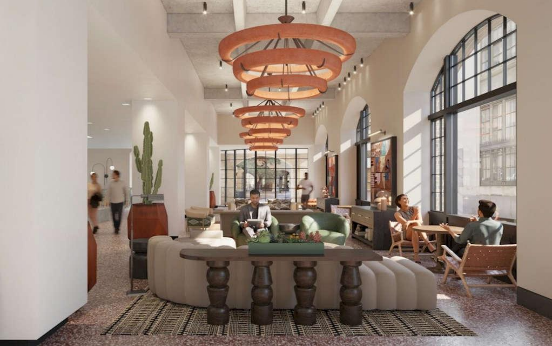
In hospitality design, you could say that the lobby acts as the living room of the hotel, setting tone, pace, and expectation. With that in mind, ID Studio uses layered seating arrangements, mixing sofas, lounge chairs, and intimate groupings, to create both energy and comfort while improving how guests naturally use the space.
The right layout often incorporates a mix of lounge seating, upright chairs, and communal tables that allows spaces to flex between work and leisure while maintaining a cohesive design theme. Upholstery and color selections must factor in longevity and how they will wear, ensuring the space feels current while remaining timeless and durable. The best seating solutions have durability fully integrated into the design, not treated as a separate requirement.
When designing a space that transitions from breakfast area to evening lounge, ID Studio approaches this through a balance of fixed and flexible seating:
· Banquettes help anchor the space and provide efficiency during peak morning use, while lounge seating and smaller groupings introduce a more relaxed, intimate scale as the day progresses.
· Loose tables and chairs offer both mobility and presence, allowing the layout to shift without losing its overall composition. Bar seating is a connector, supporting quick daytime use while naturally activating the space in the evening.
· Upholstery, finishes, and detailing selections must perform under high traffic while maintaining a level of refinement that feels appropriate and consistent from day to night.
Finally, ID Studio considers how seating can support a wider range of users. This includes appropriate seat heights, supportive arms, clear circulation, and layouts that allow for ease of movement throughout a space. These decisions are often subtle, but they can have a significant impact on how accessible hotel seating feels to all guests.
In summary, it’s important to get the seating in your hotel just right. With ID Studio’s guidance, hospitality seating can be an aesthetic and functional asset that has a positive impact on the guest experience. Contact us to begin a conversation about the role seating will play in your next hotel project.

